

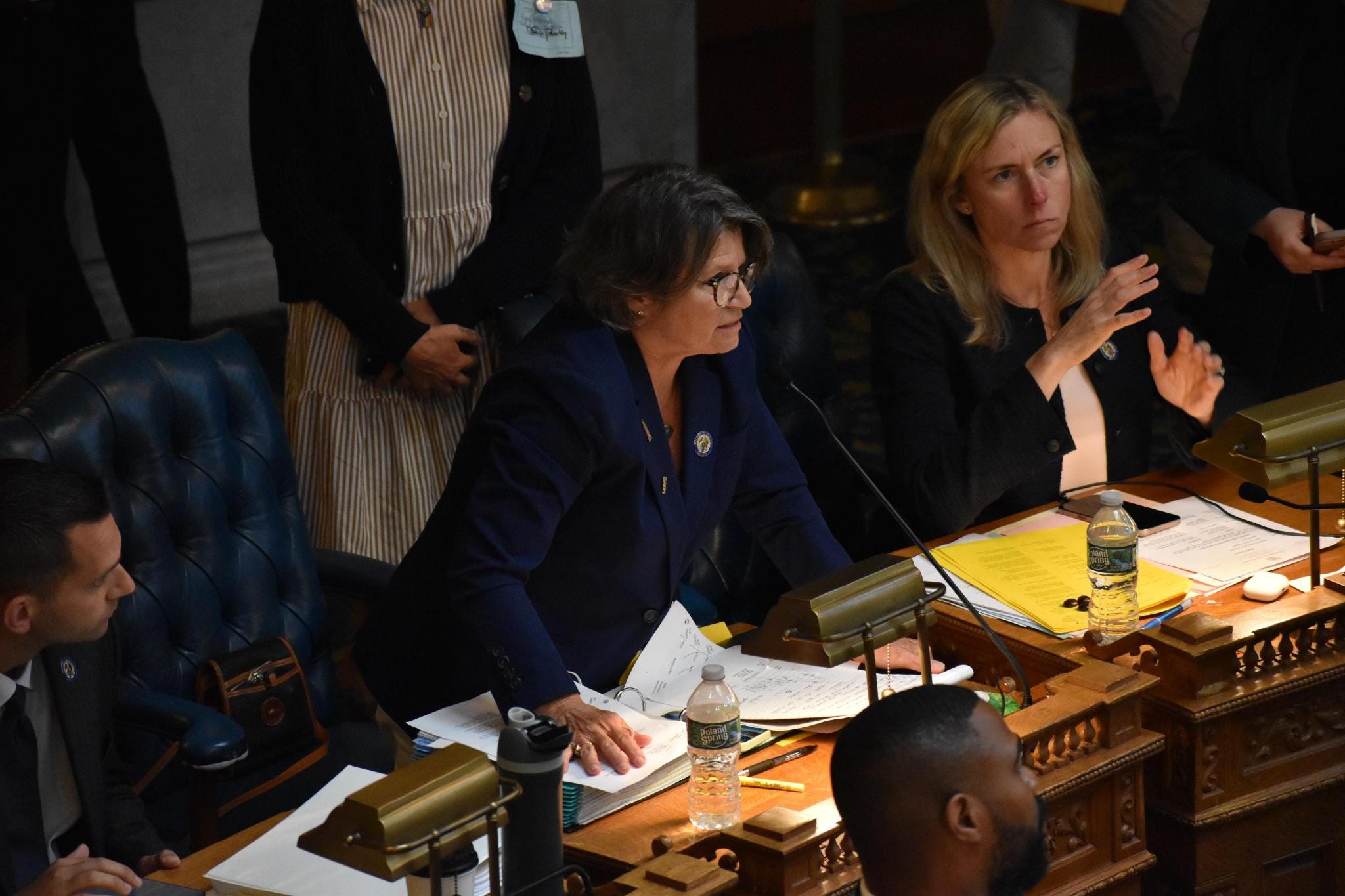
While trans Americans grieved the Supreme Court decisions curbing gender-based rights, New Jersey offered a glimmer of hope.
After years of tireless advocacy from the LGBTQ community, the Garden State finally passed a shield law, A2218 in the Assembly and S2260 in the Senate. It crossed the finish line on June 30—the same day as the BPJ and Hecox decisions were issued.
The law will protect patients and providers of reproductive health care by instituting safeguards for abortion as well as gender-affirming care for trans people. It is now on its way to the Governor’s desk.
The law clarifies both abortion and transgender-affirming treatment are “legally protected” reproductive care. Advocates emphasized that the bill does not expand the kinds of care available to New Jerseyans or change medical guidelines—it simply institutes a stopgap so that out-of-state actors cannot impede the state’s self-governance and rendering of care.
“A law of another state that authorized a person or government entity to bring [...] legal action to deter, prevent, sanction, or punish any person engaging, aiding, or assisting in providing or prescribing any legally protected health care activity is against the public policy of this State,” the bill reads. This includes treatments like puberty blockers, hormone replacement therapy, and surgery for trans adults and minors, so long as it does not violate New Jersey law otherwise.
“This bill is a firewall against outside interference,” said Khadijah M. Silver, a civil rights attorney and Director of Gender Justice & Health Equity at Lawyers for Good Government, in a press release sent to Erin in the Morning. They were instrumental in the passage of the bill. “New Jersey is drawing a clear line, requiring health care providers in this state answer only to the laws that already govern them—not to hostile actors in other states trying to reach across its borders.”
In 2023, then-Governor Phil Murphy, a Democrat, had signed an executive order creating shield protections, but without the codification of law, the provisions remained up in the air. New Jersey appears to be the last blue state to pass an intentionally trans-inclusive shield law, the final one in the country to do so after the Governor of Hawai’i signed one in late May.
While the efforts have been years in the making, the progressive state saw logistical and bureaucratic hurdles to the shield law’s passage, which were in large part exploited by state Republicans who refer to gender-affirming as care “madness.”
Current Governor Mikie Sherrill is expected to sign the bill.
After the bill failed to pass earlier this year, many trans patients and their families expressed frustration at the fact that the all-Democratic stronghold state could not get the bill over the line. “I’m terrified,” one parent of a trans teen told Erin in the Morning at the end of a prior legislative session, which was earlier in June. She said hundreds if not thousands of trans people, parents of trans youth, doctors, and activists have voiced their support for the measures.
“I don’t understand how I can live in New Jersey, which always says, like, ‘We’re the bluest of the blue.’”
The concern about shield laws has intensified as news broke of rapidfire subpoenas, both administrative and criminal, spread across the nation. From Children’s Hospital Los Angeles in the west to Boston Children’s Hospital in the east, pediatric gender clinics, which often serve legal young adults as well, have been ordered to fork over sensitive data to the Trump Administration.
But some, like NYU Langone, are fighting back against the demands—and it is, at least in part, working.
But not every state has laws like New York to compel the disclosure of subpoenas surrounding health care data, nor assurances that health care institutions will stand up for patients and providers. New Jersey’s law brings the state one step closer to that end.
“The Legislature finally affirmed that in New Jersey, we stand with evidence-based standards of medical care, and with those who provide it,” said Lauren Albrecht, senior director of advocacy and organizing at Garden State Equality, in a statement to Erin in the Morning.
“Truth won out—as did the hard work of our providers, advocates, allies, caregivers, and especially our legislative partners in getting this bill right.”
“The shield act is essential to ensuring that patients can access and providers can deliver reproductive healthcare in New Jersey without fear, intimidation, or interference,” said Assemblywoman Shanique Speight, a Democrat, in a recent press release. She is one of the bill’s primary Assembly sponsors.
“It responds to the real threats that undermine access to legally protected healthcare,” she continued. “As a state that values democracy and respects individual liberty, we are standing firm in our commitment to protecting personal choice and ensuring that legally authorized health care remains safe, accessible, and protected.”
The bill is slated to go into effect upon the Governor’s signature.

Glad to see some of the states supporting our community and trying to keep us safe.
Finally! I didn't want my birth state to let me down.