


Just in the nick of time, New Zealand’s trans youth—and the people who love them and care for them—can breathe a sigh of relief. The country’s indefinite ban on prescribing puberty blockers for trans youth was inching towards a reality come Dec. 19. But the High Court has issued an injunction, declaring that puberty blockers are essentially safe; that the ban was likely enacted unlawfully, without time for ample public input; and that, until judicial proceedings are finalized, authorities must “take no steps to enforce the regulations pending the judicial review being determined.”
“My conclusion is fortified by my finding that the timing of the regulations coupled with the lack of notice that a ban was contemplated had the effect of taking PATHA and the whole transgender community by surprise,” a High Court justice wrote.
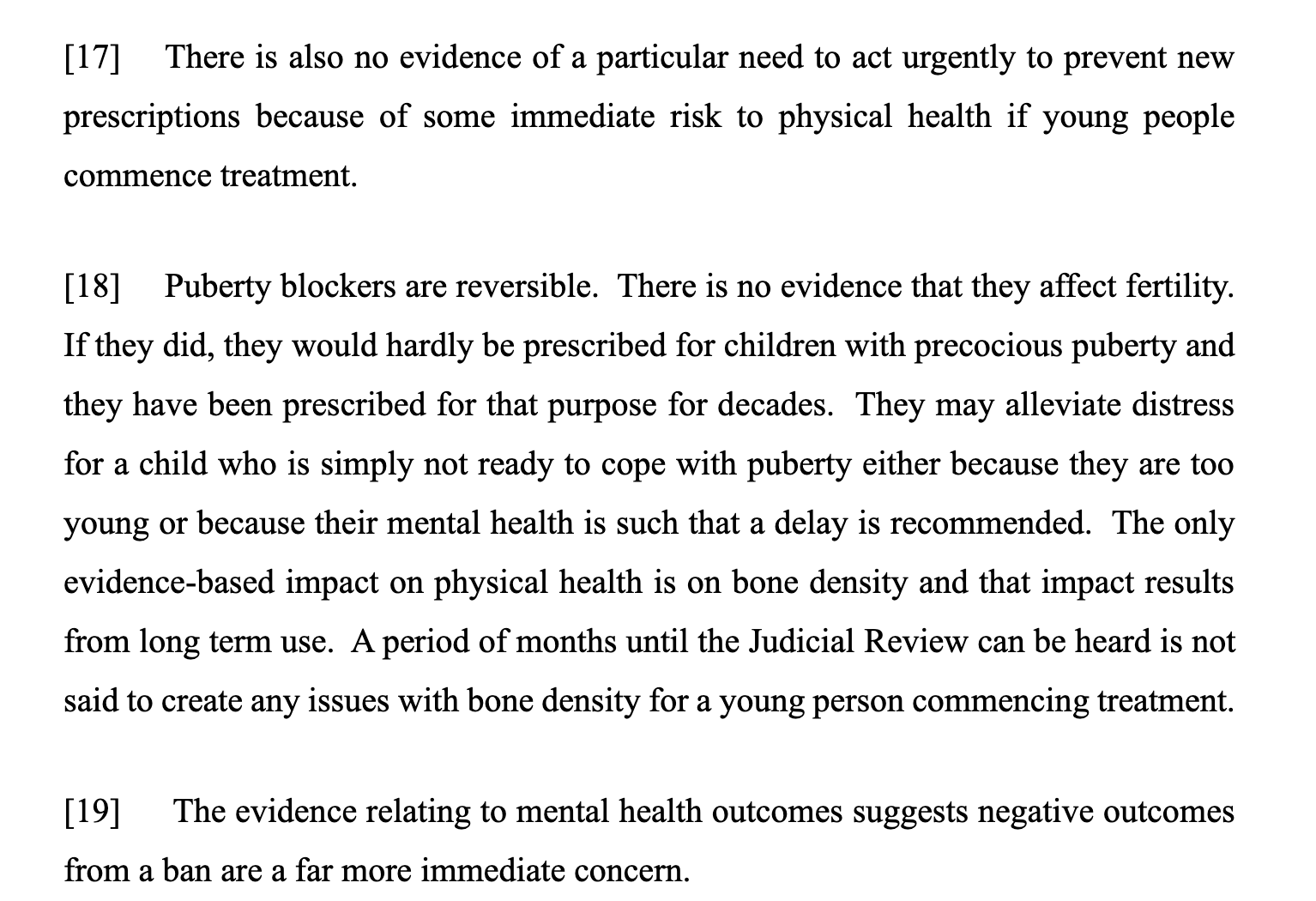
The High Court asserted that, contrary to wild speculation by anti-trans establishments, puberty blockers are largely safe and reversible. But the sudden withdrawal of life-saving medical treatments for transgender youth could have catastrophic mental health ramifications that are of “immediate concern.”
The emergency ruling comes after the Professional Association for Transgender Health Aotearoa (PATHA) filed a lawsuit against the government earlier this month. (Aotearoa is a pre-colonial name, derived from indigenous Māori peoples, for the land otherwise known as New Zealand.) As Erin in the Morning reported at the time, a right-wing talking head shocked the nation when he announced an impending, indefinite ban on prescribing puberty blockers for transgender people—before the country’s own health minister broke the news, and seemingly before any medical providers who offer this kind of care were informed of this devastating and controversial blow to the patients in their care.
PATHA’s president, Jennifer Shields, testified that the group was given no notification or prior warning of the decision announced on 19 November 2025. PATHA was not consulted about the proposed regulations, nor informed that draft regulations were being developed.
“PATHA is not aware of any other health professional or expert in this field who was notified or consulted,” court documents read. “PATHA was only made aware that there had been a decision made about puberty blockers from an X post on the morning of 19 November 2025.”
So if it wasn’t expert input that led to the ban—what did? To find that answer, one would have to look all the way on the other side of the globe. There lies a cluster of islands, nestled in the North Sea, known as “the United Kingdom.”
In this remote land, an ideological polemic (that self-identifies as a scientific paper) called “the Cass Review” triggered a similar nationwide ban on puberty blockers for trans minors, while posing no such challenge for the use of puberty blockers for cisgender children. The creation of the hotly-contested document was steered by a doctor with no clinical expertise in treating trans children and stacked with renowned anti-trans voices. As the UK-based nonprofit TransActual wrote, “Underpinning this report is the idea that being trans is an undesirable outcome rather than a natural facet of human diversity.”
Now, only a fraction of young people in the United Kingdom who need puberty blockers to alleviate gender dysphoria are able to access them. And if they even get that far, they and their parents are coerced into being subjects of government testing on the matter, or else they will be denied life-saving medical care.
This was the benchmark for New Zealand’s own puberty blocker ban, which, if enacted, would remain in effect until the conclusion of this study, which is expected to be finalized in 2031 as per Radio New Zealand.
Today’s news means that trans youth in the country can continue with their care, at least for now.
“This is a win for trans young people, their whānau, and the health professionals who care for them,” said PATHA’s Jennifer Shields in a recent press release. “The High Court has recognised the harm this ban will cause, and the significant issues in the decision Cabinet made to restrict access to this life-saving care.”

About time trans people in the world recieved what amounts to good news in 2025...
Celebrate any and every victory; amplify, amplify, amplify!