

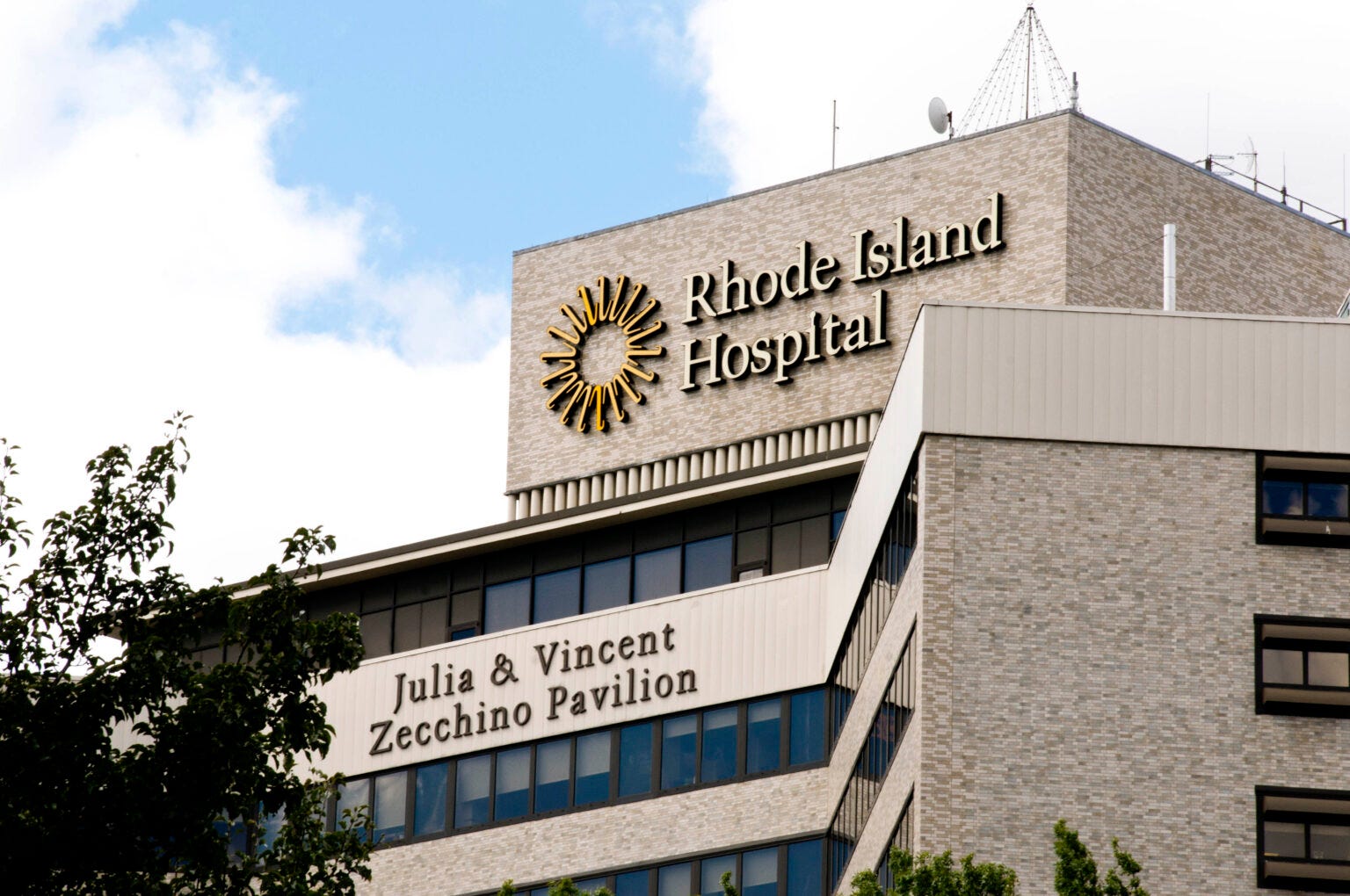
In a scathing ruling released Wednesday night, federal judge Mary McElroy—a Trump appointee—condemned Department of Justice lawyers for misrepresenting facts to multiple federal courts in an effort to obtain the names and medical records of transgender youth at Rhode Island Hospital. McElroy accused DOJ attorneys outright of "subterfuge," found that a senior DOJ official had made sworn statements that were "at best, deceptive, if not intentionally and knowingly false," and quashed the administrative subpoena in full. The case landed before McElroy after the Rhode Island Child Advocate—a statutory state office tasked with protecting children—filed an emergency motion accusing the DOJ of forum-shopping the subpoena to a friendly judge in Texas while lying about both its demands and the negotiating history with the hospital, keeping patients, the hospital, and the courts themselves in the dark.
The opinion’s opening paragraphs read like a moral indictment of the Department itself. “The United States Department of Justice (’DOJ’) possesses immense prosecutorial authority and discretion. As citizens, we trust that federal prosecutors, when wielding this awesome power against a state, a company, or certainly against vulnerable children, will play fair and be honest with its counterparts and the judiciary,” McElroy wrote.
She continued: “DOJ has proven unworthy of this trust at every point in this case. It has misrepresented and withheld information to both this Court and the United States District Court for the Northern District of Texas. It did so in an obvious effort to shield it’s recent investigative tactics—previously rejected by every other court to review them—from this Court’s review, in favor of a distant forum that DOJ deems friendly to its political positions. Its representatives have, under oath, misrepresented salient facts. It has misled the parties with whom it was negotiating in Rhode Island, who have now been placed in an untenable and unprecedented procedural position. And when its attorneys came to this Court to explain their conduct, the senior attorney—who was present at many of the events that took place in this case—sat silently by as his counterpart, a junior attorney who has been practicing law for approximately six months and had no relevant information, was forced to answer questions about DOJ’s blatant disregard for the proper course of negotiations.”
The case stems from a sweeping demand the DOJ has made of more than 20 hospitals nationwide: hand over personally identifying information on every transgender minor who has received gender-affirming care, which can include things like patient names, dates of birth, Social Security numbers, home addresses, parent and guardian information, complete clinical histories, internal billing communications, and even private communications between patients and their doctors. The subpoenas have prompted court fights acorss the United States. Just this week, NYU Langone disclosed that it had received a grand jury subpoena from federal prosecutors in Texas seeking the names of every trans patient under 18 it had treated since 2020, marking the first known criminal escalation in the campaign. The DOJ's Rhode Island subpoena, issued under HIPAA in July 2025, had been the subject of months of negotiations between federal prosecutors and Rhode Island Hospital lawyers—until late April, when the DOJ abruptly walked away from those negotiations and quietly filed for enforcement in the Northern District of Texas, a court with no apparent connection to the hospital, the patients, or the underlying investigation. That filing, which contained sworn statements McElroy would later find "intentionally and knowingly false," is what set the entire collision in motion.
Among the most serious lies McElroy found was the DOJ's sworn representation to the Texas court that it needed the personally identifying information of trans youth patients in order to investigate. In her sworn declaration submitted with the enforcement petition, Acting Director Lisa K. Hsiao of the DOJ's Enforcement and Affirmative Litigation Branch claimed that "without this information, DOJ cannot fully determine the scope of the violations, identify patterns of misbranding or fraudulent billing, or assess whether the conduct was undertaken with intent to defraud or mislead, as required for felony liability." But as McElroy discovered during the hearing, the DOJ had quietly agreed to accept anonymized patient data from hospitals in several other jurisdictions, including Los Angeles County, Pittsburgh, and Maryland. Hsiao never told the Texas judge about those settlements. McElroy wrote: "Ms. Hsiao neglected to inform the Texas court that DOJ had agreed to anonymized data in several other jurisdictions. Her assertion that DOJ needed this information was therefore, at best, deceptive, if not intentionally and knowingly false." The phrase is notable for its precision: under federal law, "knowingly" making a "false material declaration" before a federal court is the conduct that constitutes felony perjury under 18 U.S.C. § 1623, punishable by up to five years in prison.
The judge repeatedly hammered Hsiao for what she described as misrepresentations made in an "ideological crusade" against transgender people. "This is not the first time Ms. Hsiao and her subordinates have, in their crusade to obtain transgender children's medical records, acted in ways that appear to deviate from the norms of professional conduct expected of attorneys representing the United States," McElroy wrote in a footnote. She then cited two prior federal court rulings against Hsiao—one in Pennsylvania, where a judge took note of an "inconsistency" in Hsiao's sworn declaration and reminded counsel that "sworn declarations filed in federal court must reflect verified facts, not speculation recast as fact," and another in Washington state, where a court described a Hsiao filing as reflecting "a fundamental misunderstanding—or deliberate misuse—of court procedure."
The deception did not stop there. McElroy detailed several other ways the DOJ had misled the Rhode Island court, the Texas court, and the hospital itself. When the DOJ told the Texas judge that Rhode Island Hospital had stopped communicating with them in February, that was false—hospital lawyers had emailed federal prosecutors just days before, in response to the DOJ's own request for a phone call. When the DOJ asked the hospital for a meeting on April 28 to discuss next steps, they failed to mention that they had already decided to take the case to Texas; two days later they did so, and the same evening sent an email to the hospital saying there was "no immediate need to connect now." McElroy called that move a "subterfuge"—a deliberate effort to keep the hospital in the dark while the DOJ secured a court order against them in a far-friendlier forum. And when the DOJ's lawyers came before McElroy to explain themselves, the senior attorney "sat silently by," she wrote, while a junior colleague with only six months of legal experience was left to answer for the department.
McElroy then quashed the subpoena on three independent legal grounds, any one of which would have been enough to throw it out. First, she found that the DOJ's underlying legal theory—that doctors and hospitals can be criminally prosecuted for prescribing drugs off-label—is wrong as a matter of federal law. Off-label prescribing is legal, common, and accounts for roughly one in five prescriptions written in the United States. Second, she found that the subpoena had been issued in bad faith, citing seven other federal courts that have reached the same conclusion about identical DOJ subpoenas, and noting that the Trump administration "has publicly characterized gender-affirming care for minors as abuse, directed the DOJ to bring its practice to an end, and celebrated when hospitals curtailed such programs as a result of this subpoena campaign." And third, she found that the Fourteenth Amendment's protection of informational privacy bars the federal government from forcing a hospital to hand over the intimate medical records of transgender children. "DOJ's request for intimate medical details from one of this country's most vulnerable populations constitutes a drastic overreach of its investigative authority," she wrote.
The ruling will likely not slow the administration's broader campaign. The DOJ has now escalated to grand jury subpoenas, a criminal step that carries risk of incarceration, and NYU Langone disclosed last week it was one of several hospitals targeted. McElroy's now means a Rhode Island judge and a Texas judge have issued contradictory orders in the same investigation, the eventual collision in higher courts—including, potentially, the Supreme Court—looks increasingly inevitable.
Ok. So the DOJ is engaging deliberate and intentional perjury. Shouldn't that result, at a minimum, in the disbarring of its attorneys who appeared before this court and other courts who put forth these meritless accusations and issued deceptive falsehoods and half-truths? We've returned to the days of J Edgar Hoover where government agencies were utilized to attack and destroy the lives of those the president deemed as a threat. Here, it's white supremacist, racist, nativist, and christo-fascist ideologies that are running the country and are guiding their attacks.
As much as I would love to indulge in magical thinking and pin hopes on the midterms, we all know that D.C. is going to employ every dirty trick and avenue possible to prevent a fair election in November. They've already partially succeeded with the demolition of the Voting Rights Act.
Judge McElroy’s ruling in favor of Rhode Island Hospital is a major victory for Rhode Island. By calling out the government’s claims as subterfuge and lies, and by condemning the DOJ’s obvious judge-shopping, the court sent a clear message: this kind of abuse will not be tolerated. With subpoenas now issued to more than 20 hospitals and clinics, I hope every institution follows Rhode Island Hospital’s lead—stands firm, refuses to comply blindly, and forces the DOJ to justify its actions before a federal judge, just as Judge McElroy did.