

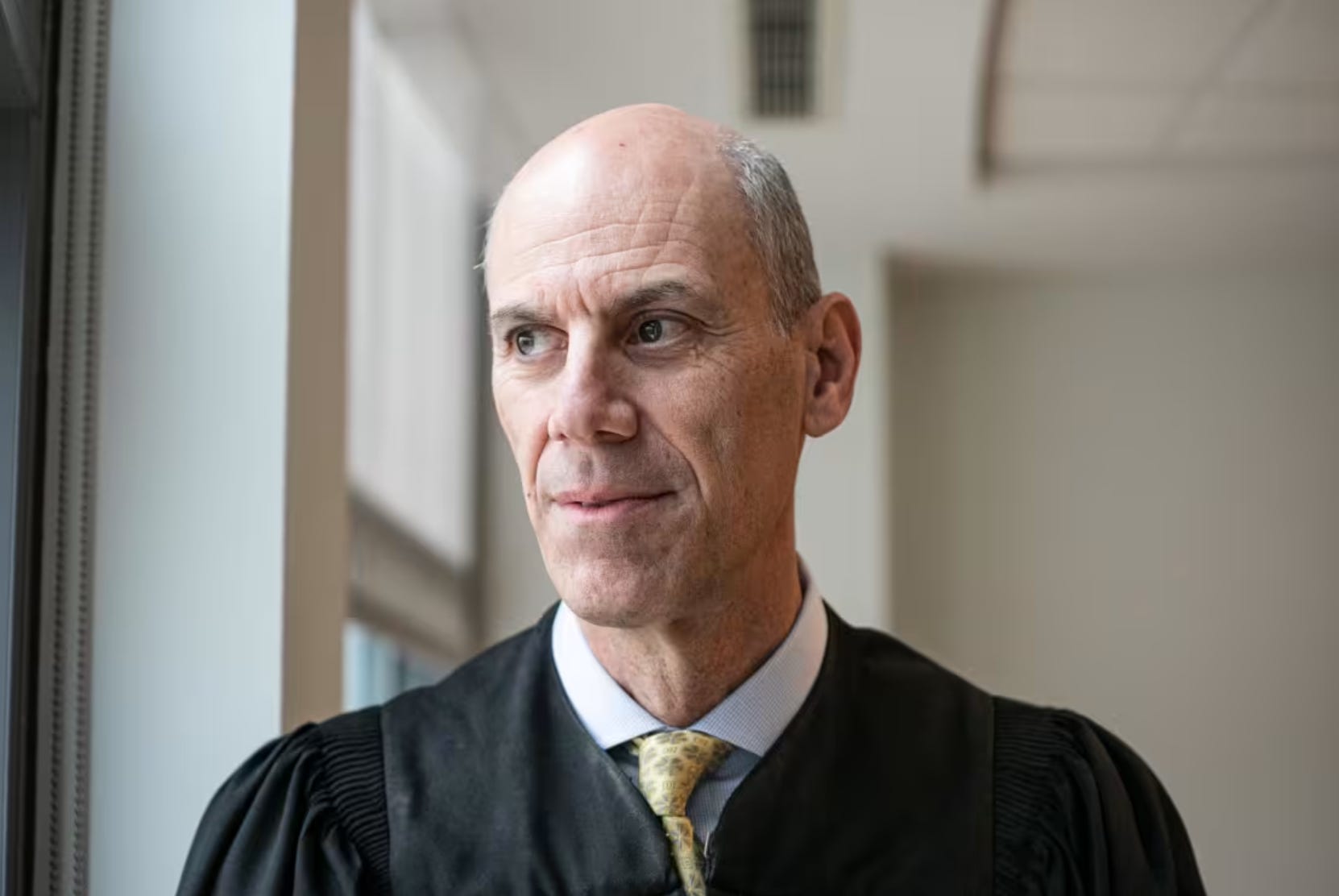
Last night, Chief Judge James E. Boasberg of the U.S. District Court for the District of Columbia granted preliminary injunctions in two parallel cases—Endocrine Society v. FTC and World Professional Association for Transgender Health v. FTC—enjoining the Federal Trade Commission from enforcing civil investigative demands against the two leading medical organizations on transgender health. The judge ruled in both cases that the FTC likely violated the organizations' First Amendment rights and engaged in unlawful retaliation against them for their protected speech supporting gender-affirming care. Boasberg further found that the Trump administration and the FTC had pursued the organizations based on "extensive evidence of animus" and "wafer-thin justifications" for their demands. For now, the private communications, internal deliberations, and member information of these two organizations are protected from the Trump administration's escalating campaign of government censorship and retaliation against the medical institutions that support transgender people.
"On this preliminary record, with extensive evidence of animus and wafer-thin justifications lacking evidentiary support, [the Court] finds that WPATH is likely to demonstrate a causal link between its protected speech and the FTC's issuance of the CID,” said the judge in the WPATH ruling. In the parallel Endocrine Society ruling issued the same day, the judge went likewise found similar violations: "The Court finds the same systemic targeting of proponents of medical treatment for gender incongruence at work here. The Society is the latest casualty in some Executive Branch agencies' bid to investigate hospitals, medical providers, and charitable organizations that support transgender health. The CID's focus on academic and medical speech, combined with the FTC's paucity of logic or evidence pointing to a genuine investigation, confirms the conclusion that the CID was likely issued for a retaliatory purpose."
The cases center on Civil Investigative Demands—administrative subpoenas the FTC issued to both organizations in January 2026, demanding sweeping and unprecedented access to their internal operations. The FTC ordered the organizations to turn over decades of internal communications about their clinical guidelines on gender dysphoria, every educational and advocacy material, every financial record, and the names of every member who had ever helped develop claims about gender-affirming care—potentially thousands of people. The CID to WPATH alarmingly reached back to 1979, the year WPATH was founded. The CIDs are part of a sprawling Trump administration campaign to suppress speech about transgender people and crush the institutions that provide it: the Kennedy Declaration, which drove more than 40 hospital systems to shutter their trans youth programs before a federal judge vacated it as unlawful last month; CMS proposed rules that would bar Medicare and Medicaid-receiving hospitals from providing such care entirely; and DOJ subpoenas to hospitals across the country, which federal judges have repeatedly quashed as "smokescreens" for retaliation. The FTC's CIDs were the latest weapon in that campaign.
The organizations challenged the demands in federal court. Last night, they won. Boasberg ruled that the CIDs were retaliation against WPATH and the Endocrine Society for their protected speech in support of gender-affirming care, and that the FTC's campaign against them was rooted in extensive animus. Among the evidence the judge cited to show extensive animus towards transgender people was: Trump's executive orders denouncing gender identity as "subversive" and "false ideology" and labeling gender-affirming care "mutilation"; FTC Chair Andrew Ferguson's pre-appointment memo pledging to "fight back against the trans agenda" and investigate "the doctors, therapists, hospitals, and others" providing such care; senior FTC staff publicly accusing medical associations of "malpractice" and calling journalists covering trans issues "partisan morons"; and the FTC's July 2025 workshop "The Dangers of 'Gender-Affirming Care' for Minors," at which speakers called gender dysphoria "science fiction" and "the foundational fraud" and described their work as a "battle of good versus evil." The judge also noted that one workshop participant—who explicitly recommended investigating medical associations to make them "start losing members" and "lose revenue streams"—was subsequently hired by the FTC.
The judge also ruled that the CIDs were designed to chill protected speech regardless of whether the FTC ever pursued formal enforcement. "The CID and the accompanying threat of future enforcement sit as a Sword of Damocles suspended over Plaintiff's head," Boasberg wrote. "To mix weaponry metaphors, the Society alleges that the FTC is using its investigative demands as a cudgel, 'inflict[ing] concrete and ongoing injuries that suppress speech,' regardless of any later enforcement action." The judge grounded that conclusion in a recent D.C. Circuit ruling, Media Matters for America v. FTC, in which the appellate court blocked another retaliatory FTC subpoena—that one targeting the progressive media watchdog group over its reporting on advertisements appearing next to white nationalist content on Elon Musk's Twitter platform. Citing that precedent, Boasberg wrote that Congress would never have intended to give an agency "license to run roughshod over a party's First Amendment rights." With that, he blocked the FTC from enforcing the subpoenas against WPATH and the Endocrine Society while the cases proceed.
"WPATH welcomes the Court's decision to grant our request for a preliminary injunction against this unlawful and retaliatory investigative demand by the FTC. We are hopeful that this preliminary injunction will prevent further harm to the First Amendment rights of WPATH and its members. For more than 50 years, WPATH has been committed to developing guidelines informed by established scientific standards, expert consensus, and patient-centered values. WPATH's dedication to this mission and the patient population it serves remains unwavering," WPATH said in a emailed statement Thursday evening.
"The D.C. District Court ruling is an important victory that recognizes medical guidelines are a valued resource that allow doctors to support patients in making decisions about their care. This ruling sends a powerful message that government efforts to pressure the medical and scientific community to abandon evidence-based practices are not permissible. In addition to affirming the Endocrine Society's First Amendment right to speak freely on matters of public health, the court recognized the chilling effect the government's actions have on the Society's work and the harm to public interest. This decision is a helpful step in ensuring the Endocrine Society can continue to advance endocrine health and patient well-being by providing clinicians with medically sound, evidence-based information," the Endocrine Society said in its own statement to the Advocate.
A third parallel case—brought by the American Academy of Pediatrics, which received its own CID from the FTC on the same day as WPATH—remains pending before Judge Christopher R. Cooper, another Obama-nominated judge on the same D.C. District Court.
You can find the WPATH and Endocrine Society rulings here:

And now another emergency application to Trump’s SCOTUS where it is a lock where it is a lock which side at least 5 of them will align. So don’t pop any champagne just yet. Bleak times for the rule of law.
Thank DAWG these cases ended up in Judge Boasberg's docket and not some rabid pro-Trump MAGA judge's docket. I suppose the next step for the FTC is to file these cases in the Fifth Circuit so they end up in front of Judge Kacsmaryk instead. Because you know they'll keep judge shopping until they get the result they're looking for.