

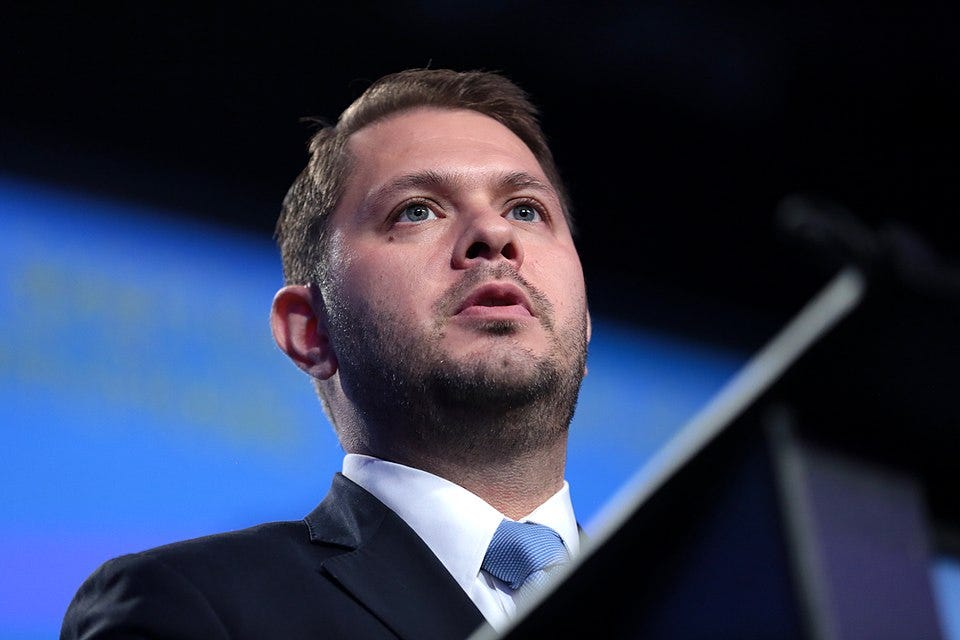
In recent months, a handful of Democrats have tried to court a strain of American politics that judges people for who they love, how they experience their gender, and the diversity of their lives. It’s happening against the backdrop of escalating far-right attacks on queer and trans communities, even as high-dollar Democratic consultants urge the party to tack right on transgender issues.
Enter Sen. Ruben Gallego of Arizona, one of the Democrats seeming to take that bait. Earlier this year, when asked about transgender participation in sports, he said he was “concerned” about fairness in women’s sports and added to transgender girls, “We love you. We want you to be part of our community, but this is just the one place you can’t play.” It was a notable moment—one of the first instances of a Democratic senator openly receding from previously held support for transgender rights. Gallego was also among the Democrats who voted for the NDAA, which includes a federal trans surgery ban for anyone in the military. He is precisely the kind of Democrat transgender people have been watching closely, waiting to see where he lands when the pressure tightens.
Now, newly leaked texts—published by a conservative source but publicly confirmed as accurate from Gallego himself—suggest Gallego’s shift may not be a mere political calculation but a reflection of deeper, toxic beliefs that have become far too common in American politics. In the messages, he laments what he sees as a decline of masculinity in the Democratic Party, complains that Democrats are not “allowing women to be hot,” and goes so far as to write that “Dem women look like dem men and dem men look like women.” This rhetoric mirrors the language used relentlessly by the far-right to lament about the appearance and prevalence of queer and trans people, and reflects a worldview where the simple existence of gender diversity is treated as a threat to masculinity itself.
You can see the texts here:

It’s the same kind of language we find from some of the worst anti-trans influencers. Candice Owens for instance, said “There is no society that can survive without strong men. The East knows this. In the west, the steady feminization of our men at the same time that Marxism is being taught to our children is not a coincidence. It is an outright attack. Bring back manly men,” in response to a man wearing a dress. Matt Walsh echoes the sentiment often, such as when he rails against feminism by claiming, “Feminism set the stage for trans activists by insisting for years that there are no significant or inherent differences between men and women apart from anatomy.” It’s rhetoric anyone following this landscape will recognize—and Gallego’s participation in it is deeply troubling.
Gallego is right about one thing: the Democratic Party has struggled to hold onto men. But the issue isn’t that the party is “not allowing women to be hot,” nor is it explained by how “dem men look” or how “dem women look.” It’s a fundamental misread to believe that becoming more regressive about gender expression—or pressuring people to conform more closely to traditional expectations of what “male” and “female” should look like—would suddenly pull male voters in. When one Democratic-aligned consultant group actually went looking for answers, it found that men care about the same things most voters do: stable incomes, accessible health care, schools that work. Democrats like Gallego should view reaching out to men as a fight for those values, yet his leaked texts suggest he has instead absorbed a worldview far more aligned with the far right—a politics that blames gender variance, the visibility of trans people, and a perceived loss of “masculinity” for the party’s challenges rather than addressing material needs.
Gallego, when confronted with his texts, did not deny them. In fact, he leaned into them, saying that they were “a reflection of what I’ve been saying the whole time.” He claimed that the texts actually reflected inclusivity: “I’ve been very clear about where I think the party needs to be. I do think we have to be an open and bigger tent party. So this is just a reflection of what I think I’ve said,” adding that the Democratic Party was “not as inclusive as it should be.”
But increasingly, we’re watching the language of “inclusivity” get twisted into a justification for excluding LGBTQ+ people—and the so-called “big tent” shrink to accommodate only those who believe transgender rights belong outside it. Gallego is not being inclusive when he derides people he doesn’t find “hot,” or when he reduces gender expression to a test of conventional masculinity. His messages do not reflect a genuine concern for the challenges facing American men, nor do they offer a blueprint for Democrats to win by mirroring the right’s hostility toward gender variance. They reflect the same tired, corrosive rhetoric we have come to expect from the far right, and we should not accept it simply because it’s coming from within our own coalition.
Wow! Stunning that the guy who divorced his pregnant wife days before their child was born turned out to be someone who can’t be trusted
Maybe he should worry more about how he acts like a man than how others do
I’m grateful for your service, but protecting my freedom is of relative value when you plan to barter it away
Disgusting, he should be ashamed